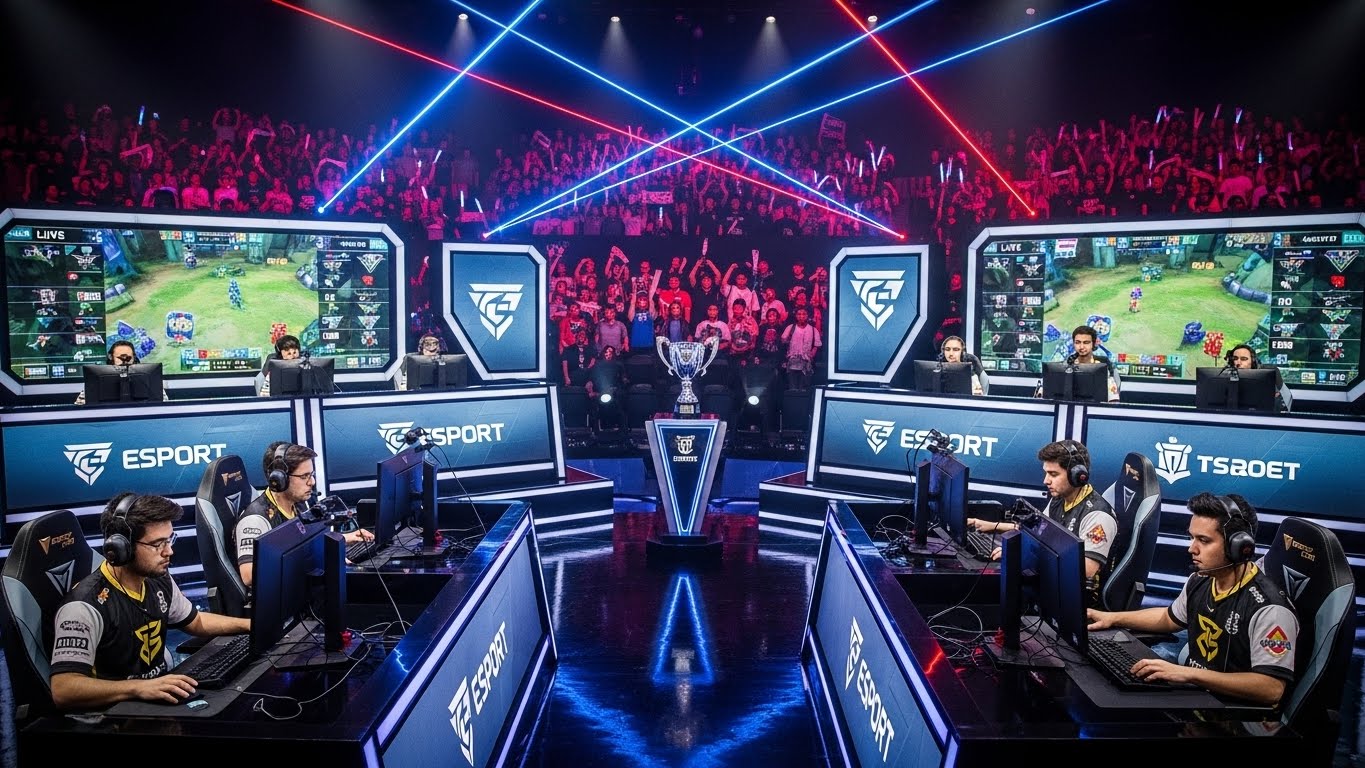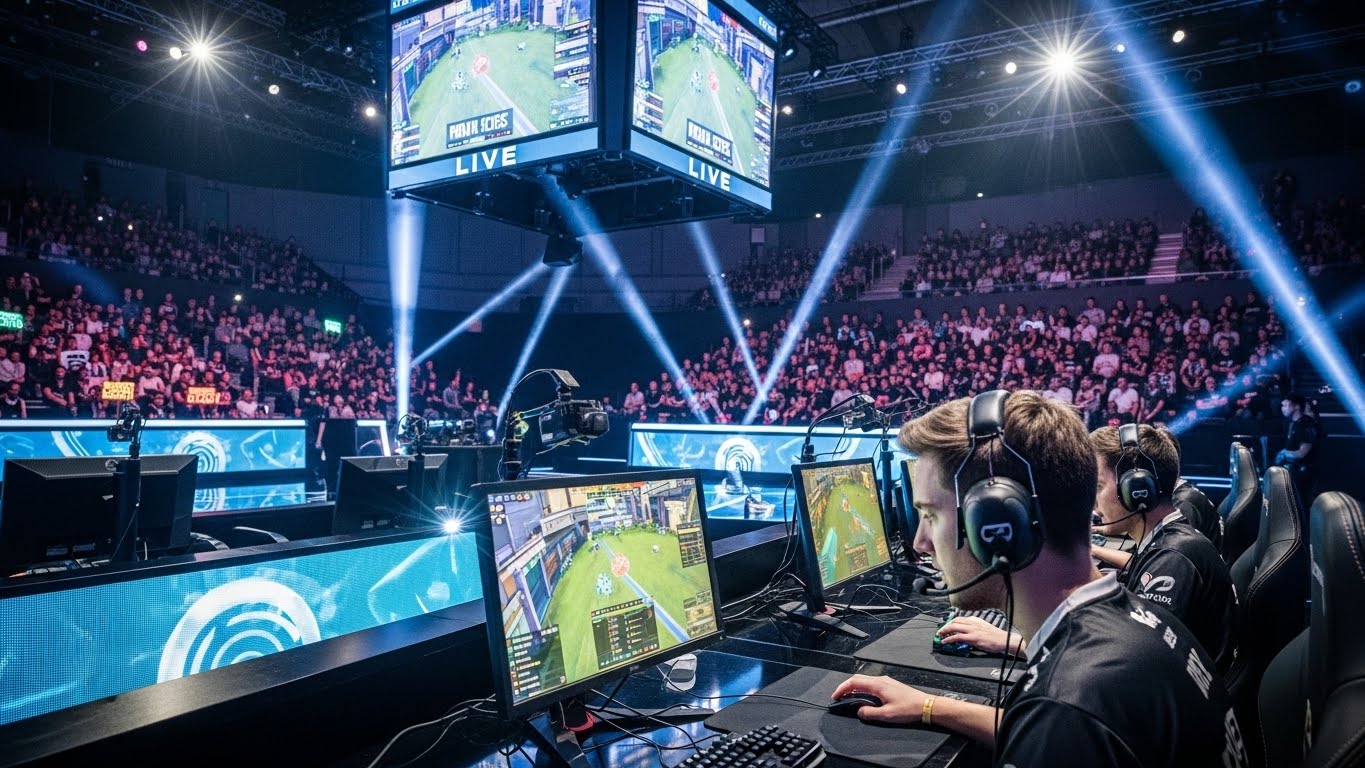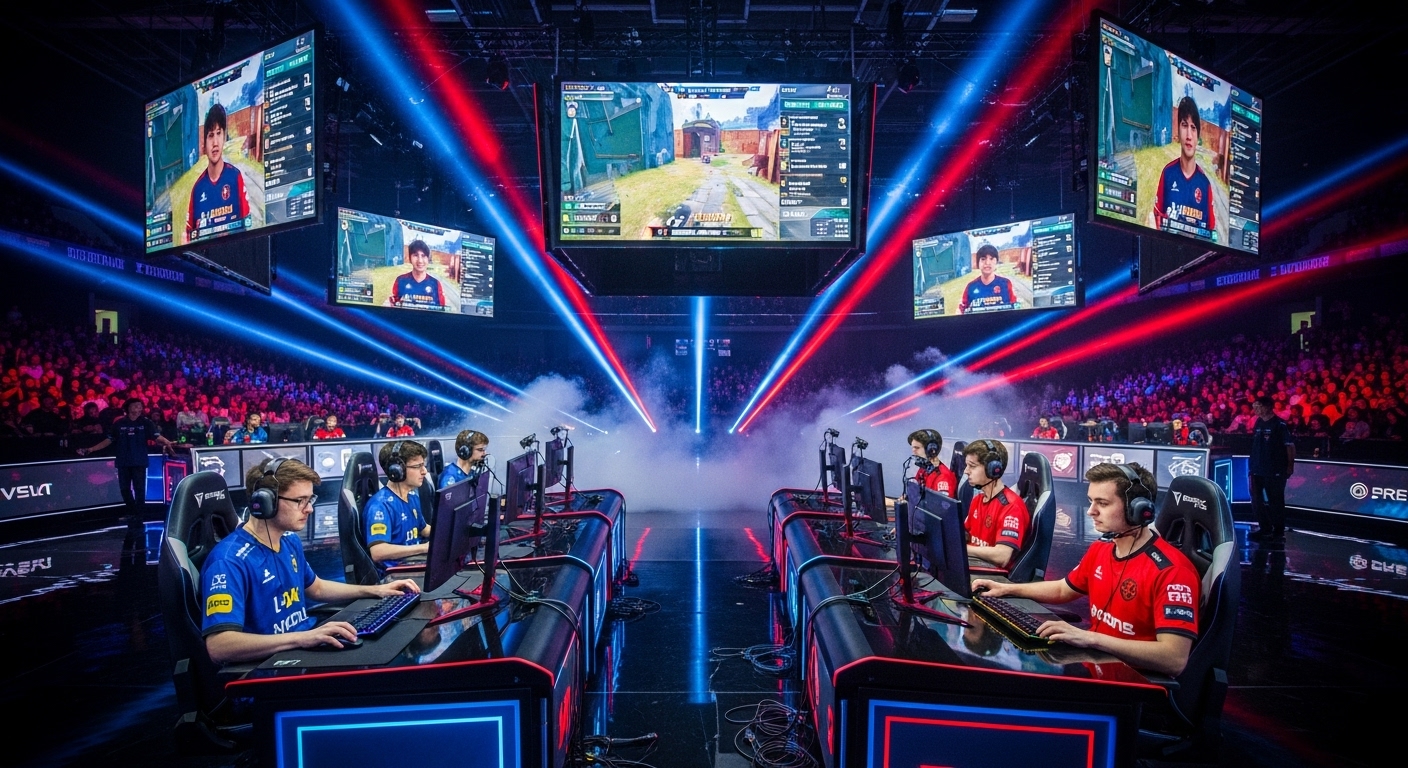
Esports, once a niche activity for a small group of dedicated gamers, has quickly transformed into a multi-billion-dollar industry with a massive global following. From its humble beginnings in local LAN tournaments to becoming a staple in mainstream entertainment, esports has evolved into a cultural force. But how did esports achieve this meteoric rise? What factors contributed to its growth, and where is it headed in the future? In this post, we will explore the origins, growth, and impact of esports, diving into its history, evolution, and the exciting future that awaits competitive gaming.
The Birth of Esports: From Casual Play to Competitive Tournaments
Esports, or electronic sports, refers to organized, multiplayer video game competitions, particularly between professional players, individually or as teams. While the concept of competitive gaming dates back to the early days of video gaming, it was in the late 20th century that esports began to form its identity.
The first significant esports event can be traced back to 1972 when Stanford University hosted the Intergalactic Spacewar Olympics, a competition based on the game Spacewar. Although small in scale, this event marked the beginning of competitive gaming. In the years that followed, more games, particularly arcade titles, began to bring players together in friendly competition. But it wasn’t until the 1990s that the infrastructure for serious competitive gaming started to take shape.
The advent of the internet in the 1990s allowed players to connect over long distances, paving the way for early online tournaments. Games like Quake, StarCraft, and Warcraft III introduced global multiplayer modes that allowed players from different countries to compete against each other. The Cyberathlete Professional League (CPL), established in 1997, was one of the first major tournament organizations, hosting events with cash prizes for games like Quake and Unreal Tournament. These early tournaments helped establish the foundation for the esports scene we know today.
The Role of Streaming: Twitch and the Growth of Online Communities
One of the key catalysts for esports’ massive growth in the 2010s was the rise of streaming platforms, particularly Twitch. Launched in 2011, Twitch revolutionized how gamers could broadcast their gameplay and connect with audiences around the world. For the first time, esports fans could watch live tournaments from the comfort of their homes, interacting with players and fellow viewers through live chats.
Before Twitch, watching esports tournaments required physically attending events or viewing them on traditional television broadcasts. Twitch’s live streaming model made it possible for esports tournaments to reach a global audience instantly. It allowed professional players, teams, and even casual gamers to build personal brands, create communities, and engage directly with fans. The platform’s integration with social media and interactive features such as live chat further enhanced the sense of community, making esports a shared, participatory experience for viewers.
The popularity of Twitch played a crucial role in attracting sponsorships and investments from both endemic and non-endemic brands. Companies like Intel, Red Bull, and Coca-Cola began to recognize the potential of esports as an entertainment medium, and they started sponsoring major events. As viewership grew, so did the financial stakes, making esports not only a hobby but a viable career for players and organizations alike.
The Global Appeal of Esports: A Worldwide Phenomenon
Esports’ growth is not confined to any one country or region. The appeal of competitive gaming transcends cultural, linguistic, and geographical barriers, making it a truly global phenomenon. While esports has always been popular in regions like North America, Europe, and East Asia, the rest of the world has quickly caught up, creating a diverse and vibrant global community of players and fans.
In countries like South Korea, esports has long been a cultural staple. The competitive gaming scene there dates back to the early 2000s, with StarCraft becoming a national pastime. The country’s strong internet infrastructure, combined with government support, helped establish a competitive ecosystem for esports, which then expanded globally. Today, South Korea remains a dominant force in esports, particularly in games like League of Legends and StarCraft II.
However, esports’ global appeal is not limited to Asia. In North America and Europe, esports has seen a dramatic rise in popularity, with major tournaments and leagues like the League of Legends Championship Series (LCS) and Call of Duty League attracting millions of viewers. Latin America and the Middle East are also emerging as key players in the esports industry, with growing fanbases and increased investment in local tournaments and teams. Esports has become a truly international form of entertainment, bringing together diverse cultures through the shared love of gaming.
Esports as a Profession: From Casual Player to Full-Time Pro
As esports has grown in both size and visibility, so too has the professionalization of competitive gaming. In the early days of esports, players often participated in tournaments for fun, with prize money being a secondary consideration. However, as the industry evolved, professional players began to emerge, supported by teams, coaches, analysts, and sponsors.
In today’s esports landscape, players can earn substantial salaries, particularly those competing in major games like League of Legends, Dota 2, and Counter-Strike: Global Offensive (CS:GO). Many professional esports players now dedicate their lives to training, practicing, and improving their skills. Esports organizations have become more structured, with players on teams receiving salaries, coaching, and other forms of support, much like traditional athletes in sports like football and basketball.
Prize pools for esports tournaments have also skyrocketed. The Dota 2 International Championship, for example, regularly features prize pools in the tens of millions of dollars. The success of these tournaments has inspired other games to follow suit, creating a competitive ecosystem where top players can earn money not only through tournament prizes but also from sponsorships, streaming, and merchandise sales.
Esports’ emergence as a legitimate career path has led to a shift in the way gaming is perceived by both players and fans. What was once seen as a hobby or pastime is now considered a professional pursuit. And while only a small percentage of players make it to the top, the industry has opened up opportunities for a wide range of roles, including coaches, analysts, content creators, event organizers, and broadcasters.
The Impact of Esports on Traditional Sports
The rise of esports has had a notable impact on traditional sports, particularly in terms of audience engagement and marketing strategies. Many professional sports leagues and teams have embraced esports as a way to connect with younger, tech-savvy audiences. The National Basketball Association (NBA), for example, has launched its own esports league, the NBA 2K League, which features professional players competing in the popular NBA 2K video game series. Similarly, several European soccer clubs, including Manchester City and Paris Saint-Germain, have invested in esports teams and players.
This crossover between traditional sports and esports has brought new legitimacy to the industry, helping to normalize esports as a major form of entertainment. Traditional sports organizations have recognized that the future of fan engagement lies in digital spaces, and esports provides an avenue to tap into this growing market. As a result, sponsorship deals, cross-promotion, and collaborative efforts between esports and traditional sports have become more common, creating a synergy that benefits both industries.
The Future of Esports: What Lies Ahead?
The future of esports looks incredibly bright. As the industry continues to grow, it is expected to attract even more viewers, investment, and innovation. Some of the key trends shaping the future of esports include:
1. Mobile Esports: With the rise of mobile gaming, esports is expanding to a new platform. Games like PUBG Mobile, Free Fire, and Clash Royale have already gained massive followings, particularly in regions like Southeast Asia, where mobile gaming is dominant. The accessibility and convenience of mobile gaming make it an ideal platform for competitive play, and mobile esports tournaments are expected to become a major part of the global esports scene.
2. Virtual and Augmented Reality: As virtual reality (VR) and augmented reality (AR) technologies advance, they are likely to revolutionize the way we experience esports. VR and AR have the potential to offer more immersive experiences for both players and viewers, transforming the way tournaments are organized and broadcasted.
3. Increased Investment and Sponsorships: As esports continues to grow, we can expect to see even more investment from major brands and organizations. Companies are increasingly recognizing the potential of esports as a marketing tool, and the influx of sponsorships will continue to drive the professionalization and expansion of the industry.
4. Collegiate Esports: With the growth of esports in schools and universities, we are seeing the emergence of collegiate esports leagues and scholarships. Many colleges now offer dedicated esports programs, providing students with opportunities to pursue gaming at a high level while receiving an education. This trend is expected to continue, creating a pipeline for the next generation of esports professionals.
Conclusion: The Impact of Esports on Entertainment
Esports has come a long way since its humble beginnings, evolving from a niche hobby into a global, multi-billion-dollar industry. With its growing fanbase, professional players, and increasing investment, esports has become a central pillar of modern entertainment. The industry’s future is bright, with innovations in mobile gaming, virtual reality, and collegiate esports set to further transform the landscape. As esports continues to grow, it will undoubtedly leave an indelible mark on the world of entertainment and redefine what it means to be a competitive gamer. Whether you’re a player, a fan, or simply a curious observer, it’s clear that esports is more than just a passing trend—it’s here to stay.